Research
My areas of research consist of:
- Core-collapse supernovae (ccSNe)
- Gamma-ray bursts (GRBs)
- Gamma-ray burst supernovae (associated with long-duration GRBs)
- Macronovae/kilonovae (associated with short-duration GRBs)
- Radiative transfer
- Observational cosmology
- EM counterparts to gravitational waves
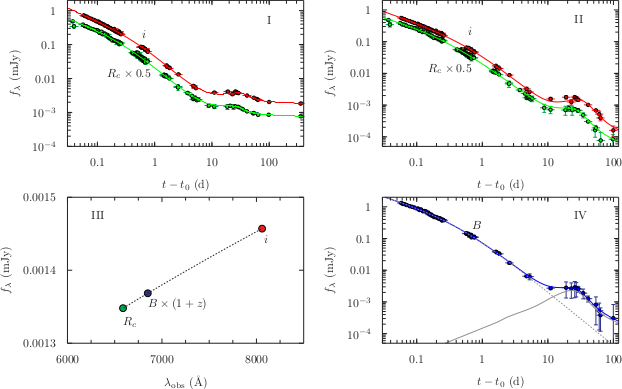
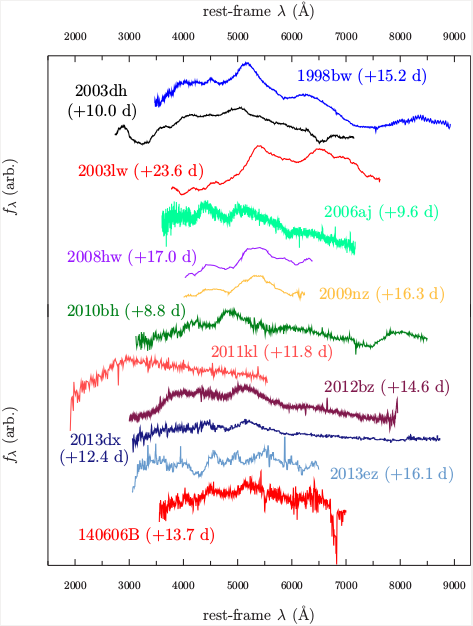
I am predominantly an observer, spending time obtaining, reducing, and modelling observations of ccSNe, GRBs, GRB-SNe, and macronovae to determine the physical processes that occur during the explosion, and use these to constrain the physical properties of the pre-explosion progenitor star. Recently my interests have turned to using GRB-SNe as cosmic distance estimators (i.e. as standardizable candles), and have used them to estimate the Hubble constant.
Research Highlights
(1) Gamma-ray burst supernovae as standardizable candles. Cano (2014) The Astrophysical Journal, Volume 794, Issue 2, article id. 121, 9 pp. (2014)
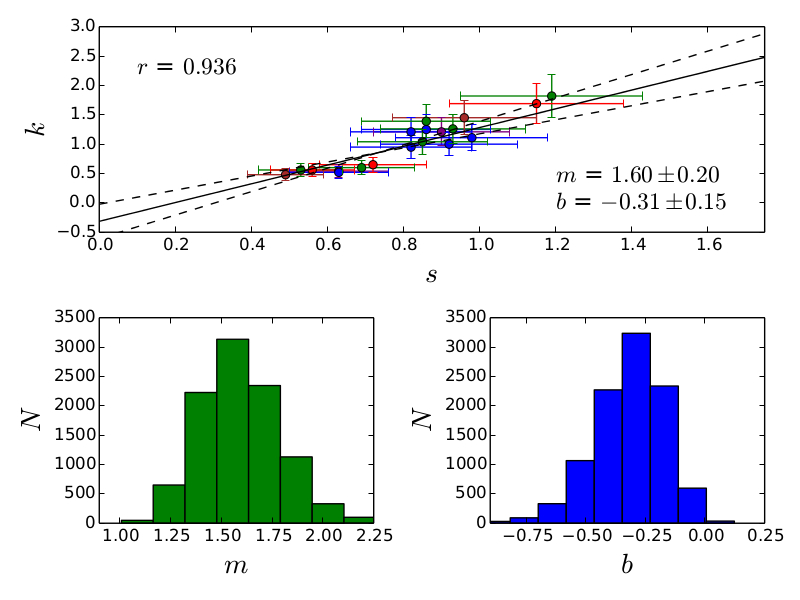
(2) The Observer's Guide to the Gamma-Ray Burst-Supernova Connection (review paper). Cano et al. (2017), Advances in Astronomy, vol. 2017, id.8929054
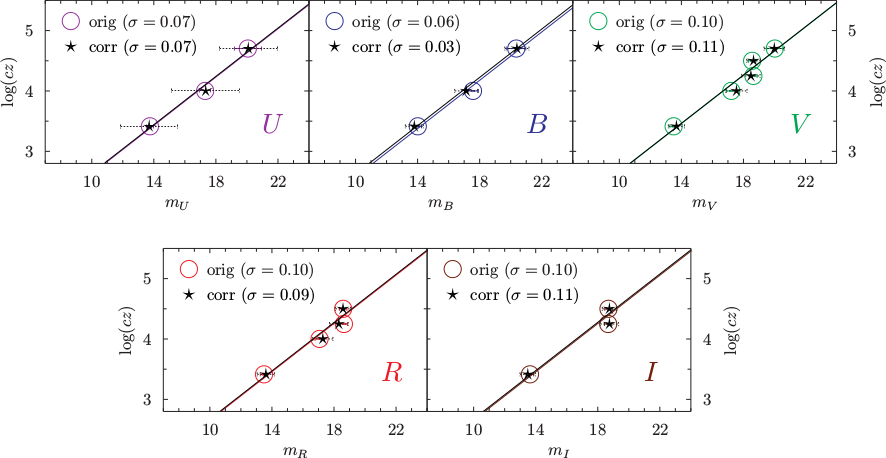
(3) A Self-consistent Analytical Magnetar Model: the Luminosity of γ-ray Burst Supernovae is Powered by Radioactivity. Cano, Johansson & Maeda (2016), Monthly Notices of the Royal Astronomical Society, Volume 457, Issue 3, p.2761-2772

Experience
2008-2011: PhD student at the Astrophysics Research Institute (ARI), which is part of John Moores University in Liverpool. My former supervisor was Dr David Bersier and my doctoral thesis is titled "The Nature of Gamma Ray Burst Supernovae".
2012-2016: Post-doctoral research fellow at the Centre for Astrophysics and Cosmology at the University of Iceland in Reykjavik, Iceland.
2015: JSPS fellow at Kyoto University, Japan.
2016-2018: Juan de la Cierva (postdoc) fellow at the Instituto de Astrofísica de Andalucía (IAA-CSIC) in Granada, Spain